Bheem Pul: According to epic lore, Bhima from the Mahabharata placed this huge rock to help the Pandavas cross the river on their journey to heaven. It still stands as a natural stone bridge and a symbol of mythic strength.
Vyas Gufa & Ganesh Gufa: These ancient caves are believed to be where sage Vyasa wrote the Mahabharata, with Lord Ganesha acting as his scribe. It’s an awe-inspiring stop for anyone curious about India’s sacred stories.
The Vanishing Saraswati: One of India’s holiest and most mysterious rivers is said to disappear into the earth right near Mana. Locals say this is where the physical world meets the divine.
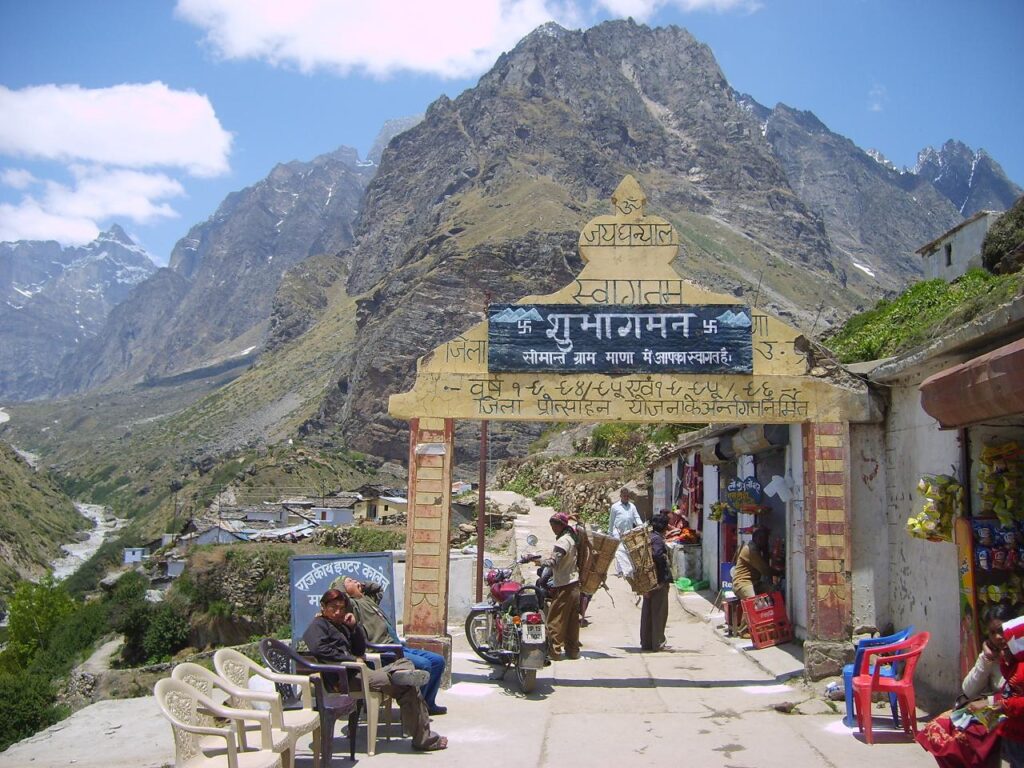
Bhotiya Culture: The local community, called the Bhotiyas, keep their Tibetan roots alive. You’ll see them wearing traditional outfits like Zera caps and Bakhu tunics. They live in sturdy stone houses, weave woolen goods, and celebrate cultural festivals like the Nanda Devi Raj Jat and Mana Mela with heart and spirit.
Adventures Nearby
Vasudhara Falls(3–4 hour trek): A jaw-dropping 400-foot waterfall, believed to be where the Pandavas rested. The hike is worth every step—peaceful, scenic, and rich in energy.
Satopanth Lake: A glacier-fed alpine lake at 4,600 meters, surrounded by towering peaks. It’s a sacred, soul-touching destination for trekkers and pilgrims alike.
Mana Pass: A high-altitude mountain pass near the Indo-China border, only accessible with special permission. At over 5,600 meters, it’s one of the most remote and dramatic landscapes in the region.
Neelkanth Peak & Tapt Kund: Mana offers stunning views of Neelkanth, known as the “Queen of Garhwal.” You can also dip your toes into Tapt Kund, a natural hot spring revered for its healing warmth.